
Cockroaches
Treatment:
Our skilled professionals follow a systematic approach to address cockroach infestations. Beginning with a thorough search to pinpoint their hiding spots, we strategically place specialized traps and tapes coated with adhesive solutions. This allows us to identify the exact extent of the infestation. Subsequently, we administer a residual spray and gel, disrupting their growth hormones and life cycle. To seal off potential entry points, we apply a specialized solution to crevices and cracks, preventing future outbreaks. When it comes to eliminating cockroach infestations in Gauteng, Katlego Hygiene Services is your premier choice. Our seasoned operatives possess the expertise and technical know-how to tackle infestations swiftly and effectively. Whether you’re dealing with an existing infestation or seeking proactive measures to safeguard your property, count on us for prompt and reliable solutions. At Katlego Hygiene Services, we prioritize long-term results to minimize the need for recurrent interventions and additional costs for our valued clients.
Our dedicated teams utilize highly effective insecticides, including long-lasting sprays that disrupt reproductive capabilities and specialized gels that impede their growth into adulthood, ensuring sustained protection against future infestations.
Understanding the behavior and habitat preferences of cockroaches is crucial for effective control and prevention strategies in homes, businesses, and other indoor environments. Regular inspections, proper sanitation practices, and prompt treatment of infestations can help mitigate their presence and reduce associated health risks.
Cockroaches present one of the most significant public health risks, carrying diseases such as dysentery, gastroenteritis, diarrhoea, typhoid, poliomyelitis and salmonella and can transfer this to our food products.
Facts about cockroaches:
Cockroaches have to be one of the most abhorred insects that can infest households, warehousing where foodstuff is stored, and kitchens of hotels and restaurants. These insects are capable to can easily transfer various diseases especially bacterium which if not contained can result in the contamination of food products.
They prefer to exist and multiply close to warm and moist areas sewers, and drains being their favorite places along with having contact with nutrients; their ability to eat any type of food gives them unlimited opportunities to survive.
Information on Cockroaches:
There are four most commonly known cockroaches
German cockroach
The German cockroach (Blattella germanica) is one of the most common and troublesome cockroach species worldwide, especially in urban environments. Here’s some information about them:
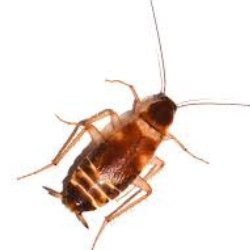
Appearance: German cockroaches are light brown or tan in color with two distinctive black stripes running lengthwise on their pronotum (the shield-like segment behind the head). They are relatively small compared to other cockroach species, typically measuring about 1/2 to 5/8 inch (12 to 15 millimeters) in length as adults.
Habitat: German cockroaches prefer warm and humid environments, making them common pests in kitchens, bathrooms, and other areas with access to food, water, and shelter. They are often found in homes, restaurants, hotels, and other commercial establishments. They tend to hide in cracks and crevices during the day and come out at night to search for food and water.
Behavior: German cockroaches are primarily nocturnal and omnivorous scavengers, feeding on a wide variety of food items including crumbs, grease, and other organic matter. They are highly adaptable and can quickly reproduce and establish large infestations if not controlled. They have a rapid breeding cycle, with females capable of producing several egg cases (oothecae) in their lifetime, each containing around 30 to 40 eggs.
Reproduction: Female German cockroaches carry their egg cases (oothecae) for about 3 to 4 weeks before depositing them in a sheltered location. The eggs hatch in approximately 1 to 2 months, and the nymphs undergo several molts before reaching adulthood, which can take a few months. Under optimal conditions, German cockroaches can complete their life cycle in as little as 3 months.
Control: Effective control of German cockroaches often involves a combination of sanitation, exclusion, and insecticide treatments. Since they reproduce quickly and can develop resistance to insecticides, integrated pest management (IPM) strategies that target multiple aspects of their biology and behavior are typically recommended. This may include eliminating food and water sources, sealing entry points, using baits, traps, and insect growth regulators, and applying targeted insecticide treatments.
Health Concerns: German cockroaches can carry and transmit various pathogens, including bacteria, viruses, and parasites, which can pose health risks to humans. They can contaminate food and surfaces with their feces, saliva, and body parts, potentially leading to foodborne illnesses and allergic reactions in sensitive individuals.
Understanding the behavior and habitat preferences of German cockroaches is crucial for effective control and prevention strategies in homes, businesses, and other indoor environments. Regular inspections, proper sanitation practices, and prompt treatment of infestations are key components of integrated pest management programs aimed at managing these pests.
American Cockroach
The American cockroach (Periplaneta americana) is one of the largest and most common cockroach species found worldwide. Here’s some information about them:
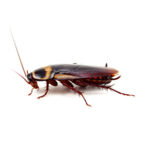
Appearance: American cockroaches are reddish-brown in color and typically measure between 1.5 to 2 inches in length as adults, making them one of the largest species of cockroach. They have a distinctive yellowish figure-eight pattern on the back of their head.
Habitat: These cockroaches are often found in warm and moist environments such as basements, sewers, kitchens, and bathrooms. They are also commonly found outdoors in areas like mulch, leaf litter, and around drains. While they prefer warm climates, they can adapt to various conditions and are often found in urban areas.
Behavior: American cockroaches are nocturnal and omnivorous scavengers, feeding on a wide range of organic matter including food scraps, decaying matter, and even cardboard or glue. They are agile runners and can move quickly when disturbed. They are also known for their ability to fly, although they generally prefer running.
Reproduction: Female American cockroaches produce egg cases called oothecae, which contain around 14 to 16 eggs. They typically carry the ootheca for a few days before depositing it in a sheltered location. The eggs hatch in about 6 to 8 weeks, and the nymphs undergo several molts before reaching adulthood, which can take several months.
Control: Controlling American cockroaches often involves a combination of sanitation, exclusion, and insecticide treatments. Since they can enter structures through small openings and thrive in a variety of environments, comprehensive treatment is necessary. Eliminating food and water sources, sealing cracks and crevices, and applying insecticides strategically are common control methods.
Health Concerns: American cockroaches can carry and transmit various pathogens, including bacteria, viruses, and parasites, which can pose health risks to humans. They can contaminate food and surfaces with their feces, saliva, and body parts, potentially leading to foodborne illnesses and allergic reactions in some individuals.
Brown-banded cockroach
The brown-banded cockroach (Supella longipalpa) is a species of cockroach belonging to the family Ectobiidae. Here’s some information about them:
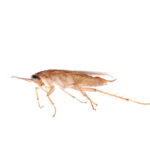
Appearance: Brown-banded cockroaches are relatively small compared to other common species like the German cockroach. They typically measure around 10 to 14 millimeters in length as adults. As their name suggests, they have distinctive light brown bands across their wings and abdomen.
Habitat: Brown-banded cockroaches prefer warm and dry environments, unlike the German cockroach which prefers warmth and moisture. They are often found in areas such as bedrooms, closets, furniture, and electrical appliances. They tend to stay away from kitchens and bathrooms, unlike other species.
Behavior: These cockroaches are nocturnal, meaning they are most active during the night. They are omnivorous scavengers, feeding on a variety of organic matter including food scraps, starches, and even book bindings or wallpaper paste. They are also known to be more inclined to hide in elevated areas compared to other species.
Reproduction: Brown-banded cockroaches reproduce quickly. A female can lay around 10 to 18 egg cases (oothecae) in her lifetime, each containing around 10 to 18 eggs. The nymphs undergo several molts before reaching adulthood, which can take a few months.
Control: Controlling brown-banded cockroaches typically involves a combination of sanitation, exclusion, and insecticide treatments. Since they tend to hide in diverse locations, comprehensive treatment is necessary. However, they can be more challenging to control than German cockroaches due to their tendency to scatter and their preference for drier environments.
Health Concerns: Like other cockroach species, brown-banded cockroaches can transmit pathogens and trigger allergic reactions in some individuals. Their presence in homes or other indoor environments can pose health risks, particularly in sensitive populations such as children, the elderly, and individuals with respiratory conditions.
Oriental cockroach
The Oriental cockroach (Blatta orientalis) is a common species of cockroach found worldwide, particularly in temperate and tropical regions. Here’s some information about them:
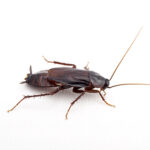
Appearance: Oriental cockroaches are relatively large and shiny, with a dark brown to almost black coloration. Adult females measure around 1 to 1.25 inches (25 to 32 millimeters) in length, while males are slightly smaller. Unlike some other species, Oriental cockroaches do not have distinct markings on their bodies.
Habitat: Oriental cockroaches prefer dark, damp, and cool environments, which often leads them to inhabit basements, crawl spaces, sewers, and other moist areas. They are commonly found outdoors in areas such as mulch, leaf litter, and garbage dumps. They may also enter structures through cracks, gaps, and sewer lines, especially during periods of extreme weather conditions.
Behavior: Oriental cockroaches are primarily nocturnal and omnivorous scavengers, feeding on a variety of organic matter including decaying plant material, garbage, and sewage. They are relatively sluggish compared to other cockroach species and tend to move more slowly. They are not strong fliers and typically prefer to crawl.
Reproduction: Female Oriental cockroaches produce egg cases (oothecae) containing around 16 eggs, which they carry for about a day before depositing in a sheltered location. The eggs hatch in approximately 2 to 3 months, and the nymphs undergo several molts before reaching adulthood, which can take several months. Under optimal conditions, Oriental cockroaches can live for about 1 to 2 years.
Control: Controlling Oriental cockroaches often involves a combination of sanitation, exclusion, and insecticide treatments. Since they prefer damp environments, reducing moisture levels by fixing leaks, improving ventilation, and removing debris can help deter them. Sealing entry points and applying insecticides to harborage areas are also effective control measures.
Health Concerns: Oriental cockroaches can carry and transmit various pathogens, including bacteria, viruses, and parasites, which can pose health risks to humans. They can contaminate food and surfaces with their feces, saliva, and body parts, potentially leading to foodborne illnesses and allergic reactions in sensitive individuals.
Gallery