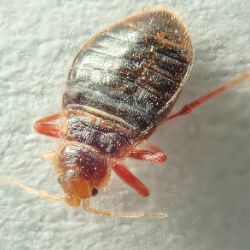

Bed Bugs
Treatment:
To effectively eradicate bed bugs from your home, our team of professional exterminators employs a meticulous approach. Initially, we meticulously inspect all potential hiding spots of these pests, which may necessitate the removal of skirting boards, headboards, and even wardrobes in proximity to the bed. Subsequently, all bed linens and blankets are laundered on a high-temperature cycle and securely packed into sealed plastic bags until our treatment is complete. Our skilled Pest Technicians then administer targeted pesticide applications to mattresses, walls, and floors, ensuring the elimination of bed bugs while prioritizing the safety of both occupants and pets. Following the treatment, the treated room is sealed off, with no entry permitted for a minimum of four hours. We strongly recommend enlisting the expertise of specialized and qualified pest control professionals, such as Katlego Hygiene, who possess a proven track record in tackling bed bug infestations. Regardless of the circumstances leading to the invasion of bed bugs into your living space, they pose a persistent and alarming nuisance. Their bites, typically concentrated around the waistline during nocturnal hours, can occur on various exposed areas of the body, including the arms and legs, as victims shift positions during sleep. This unpredictability underscores the urgent need for comprehensive bed bug control measures.
Information on bed bugs:
Months of Activity: January – December
The common bed bug is the best adapted to human environments. It is found in temperate climates throughout the world and has been known since ancient times. Small, nocturnal insects, bed bugs feed on the blood of humans, occasionally causing skin infections and scars when the bites are scratched.
While bed bugs have been known to harbor pathogens in their bodies, including plague and hepatitis B, they have not been linked to the transmission of any disease and are not regarded as a medical threat.
What your bed is made from will make no difference to whether you get bed bugs or not. Whether you have a wooden bed or a metal bed, precautions need to be taken.
Appearance: Adult bed bugs are 4-5mm long and reddish-brown. They appear flattened, oval, and wingless.
Newly hatched nymphs are translucent and lighter in color than the adults.
Lifecycle: Female bed bugs lay between 200-500 eggs over two months, and can reproduce all year round. The eggs are visible to the naked eye measuring 1 mm in length and are a milky-white tone in color.
The eggs hatch in one to two weeks, with the hatchlings beginning to feed immediately. They pass through five molting stages before reaching maturity, requiring a feed during each of these stages.
At room temperature, it takes about 5 weeks for a bed bug to pass from hatching, through to maturity, at which point they become reproductively active.
What are Bedbugs?
Bedbugs are minute parasitic insects which as their name indicates, are normally found in mattresses bed linen, and in the bedroom generally. Although they do not have wings, they can travel up to 30 meters in one night from their hiding places to have their ‘blood feast’. They are found in the lining of clothes, on fabric luggage, and in numerous locations. They are exceptionally difficult to locate and are very good at concealing themselves in bed frames, furniture, behind skirting boards, and various crevices in the bedroom.
Bed bugs feast on you during the night while you sleep, their bites can lead to irritation, and itchiness can be sensed. The majority of their victims are not conscious that they’re being fed upon until they wake in the morning; as bedbugs inject a mild anesthetic before actually feeding. Some of their victims have described being awakened during the night time itching in several places.
Bed bugs that have recently hatched are tiny, approximately 1mm, once they have reached adulthood they can be 5mm in length and 4mm in width with a flat appearance before feeding. They are flat and only 1mm high and have an oval shape viewed from above. They differ in color from almost white when they shed their skins to dark brown their color depends on whether they have just fed, as the blood they have ingested color their bodies.
Gallery