
Ants
Treatment:
Black garden ants do not pose any major threat to our health, but they can become a real nuisance when they enter our homes and workplaces.
Effective control of the black garden ant is only viable on a small scale. It is generally accepted that the best method is through barrier spraying at wall / floor junctions. Large infestations should be tackled by a pest control professional who can use the correct type of insecticide for the job.
Effective control of the pharoah ant is often long term, using a baiting solution in every area where the ants are known to forage. In sever infestations of larger buildings, total elimination of pharaoh ants has been known to take up to a year.
Katlego Hygiene have qualified technicians who can identify the species of ants and execute the treatment needed to eliminate them. The most common species of ants that perhaps you will encounter in your premises is the black garden ant Lasius Niger and Pharaoh Ant Monomorium pharaonis.
The nest that may be encountered in the garden is probably greater than is visible aboveground; consequently it is advisable that an effective professional treatment employed.
Pharaoh’s Ants pose the biggest risk to health. As they often feed in unhygienic areas such as drains and bins they can easily transmit pathogens. This can be of particular concern if infestations are found in sterile hospital environments. Infestations can also be more difficult to eradicate as the worker ants have the ability to ‘bud off’ new colonies if the main colony is under stress.
Anthills usually are very widespread inside but normally do have a very narrow look outside. Our pest control company will effectively treat them with a professional spraying. A real problem might be if you have an anthill inside your house. In this case Katlego Hygiene can help to eradicate nest sites and provide a barrier to insect entry.
Information on Ants:
There are two main pest species, the Black or Garden Ant (Lasius niger) and the Pharoah’s Ant (Monomorium pharaonis). They both cause nuisance as they travel widely in search of food, following trails and clustering around the food source.
Black ant
Length: 2-12mm
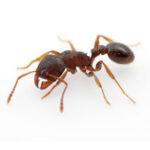
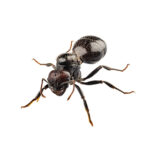
Colour & description: The workers are 2 – 5mm in length and dark brown/black. Queens are upto 12mm long and are brown
Habits & habitat: Black ants nest outdoors in walls and under paving etc. They forage widely for food and water and commonly enter domestic premises and control is only required where they have become a serious nuisance indoors. Have only 1 queen per nest.
Life cycle: 50 – 70 days. Reproduction rate: A black ant colony has a single queen and tends to have about 5,000 individuals. A queen can live up to 12 years.
Pharoah’s Ant
Length: 1.5-5mm
Colour & description: The workers are 1.5 – 2mm in length and yellow-brown in colour. The antennal segments end in a distinct club with three progressively longer segments. Queens are between 3.6 – 5mm long and are dark red in colour. They are winged but do not fly.
Habits & habitat: They require warm humid conditions so in many areas they are confined to buildings. In warm climates infestations can be found outside. Infestations can be found in a wide variety of locations including apartment blocks, hotels, hospitals, food handling premises etc.
Have many queens per nest and infestations tend to spread through budding. Foraging workers leave the main nest with brood to form satellite colonies.
Life cycle: 38-45 days
Reproduction rate: A Pharaoh Ant queen can lay 400 or more eggs in her lifetime. Most lay 10 to 12 eggs per batch in the early days of egg production and only four to seven eggs per batch later.
Ants are social insects that belong to the same order as wasps and bees. Each ant is a member of a highly organized colony or nest which can sometimes consist of millions of individuals. Within a single nest, there are workers, soldiers, drones and queens and colonies can occupy and use a wide area of land to support them.
There are about 11,880 known ant species, most of which are tropical. Ants are extremely social creatures and their ability to adapt to most environments has enabled them to colonize almost every landmass on Earth.
Gallery